
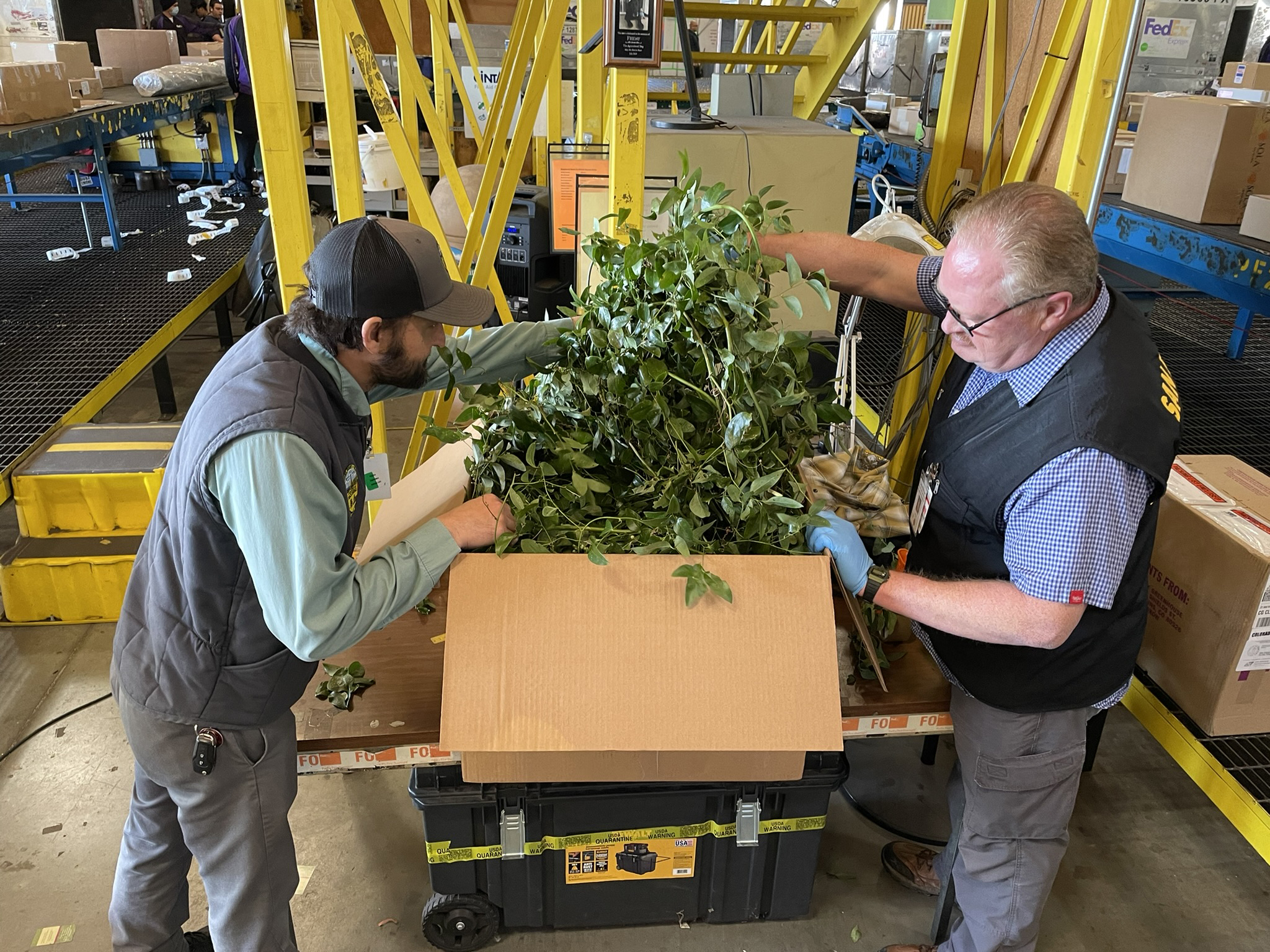
The Pest Exclusion Division is the first line of defense in keeping invasive agricultural pests out of our region to protect the food supply and promote our regional economy and environmental sustainability. We inspect imported and exported plant shipments and production nurseries to look for harmful agricultural pests and support agricultural trade.
- 5,177 imported plant shipments inspected with 135 invasive pest finds
- 377 nurseries, equivalent to 8,335 acres, inspected for pests and diseases
- 161,952 Glassy-winged sharpshooter traps inspected in production nurseries
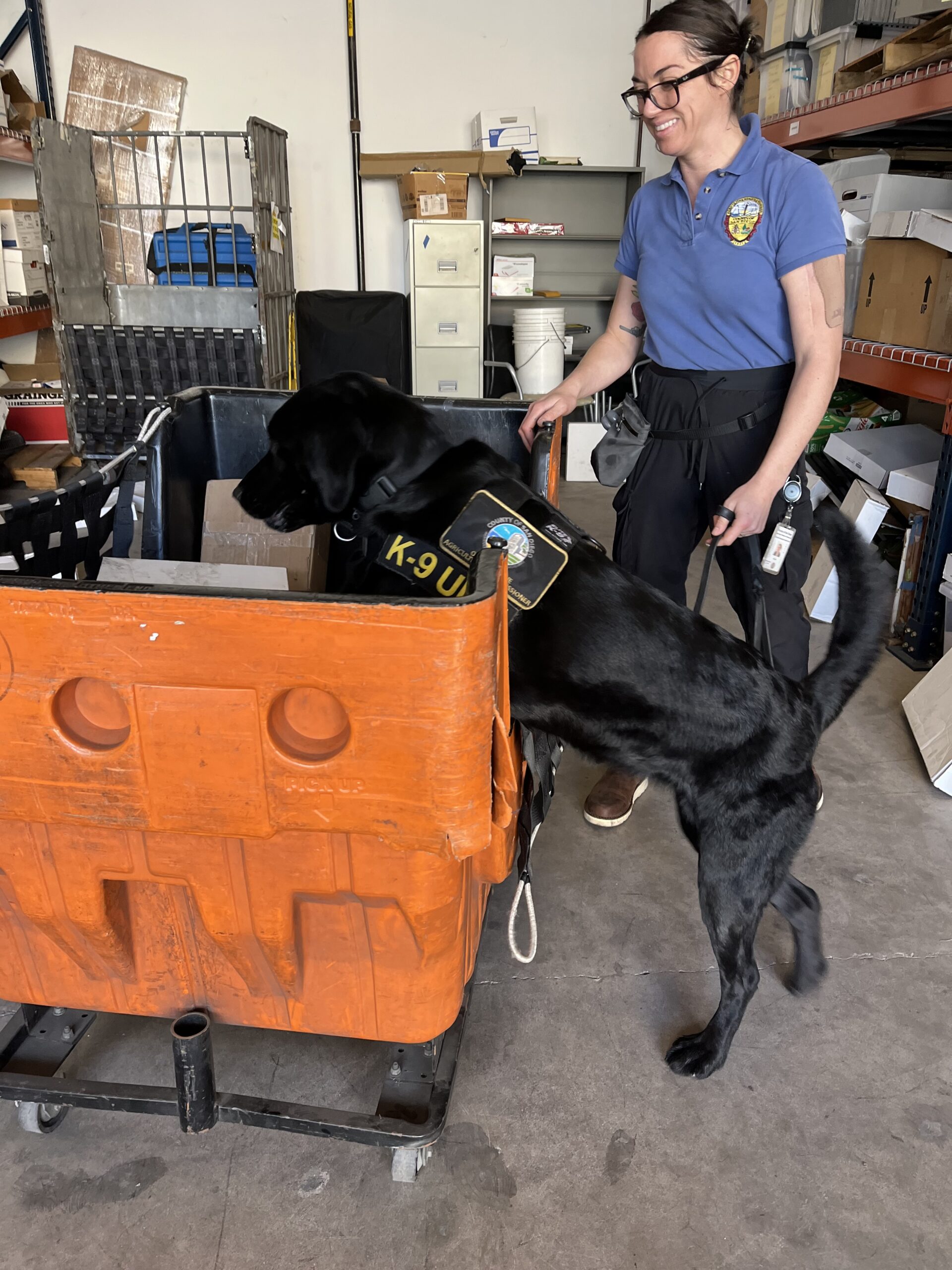
The Detector Dog Team Program supports the statewide pest prevention network and protects regional natural and agricultural resources by using two Agricultural Detector Dog Teams to check shipments at parcel facilities.
- 73 incorrectly marked packages containing plant material were intercepted by the Detector Dog Teams at terminal facilities and the United States Postal Service distribution center
The Pest Detection Program is a critical component of our statewide pest prevention network as it is the final line of defense against invasive pests to support agricultural trade and environmental sustainability. There were 173,528 insect trap inspections conducted at residential locations throughout the county. The traps are used to detect insect pests, such as invasive fruit flies, spongy moth, Japanese beetle, and other pests that pose threats to California’s agricultural and horticultural crops. The program assists both State and federal agencies in conducting activities to eradicate the pests promptly and effectively. Early detection of pests allows eradication efforts to begin before these pests multiply and spread, becoming economically challenging to control.
The Plant Pest Diagnostics Lab provides rapid preliminary identification allowing a prompt response in the fight against invasive pests that damage agricultural crops and landscape plants. Our lab also partners with the California Department of Food and Agriculture’s Plant Pest Diagnostics Center and the University of California Cooperative Extension (UCCE) Master Gardeners to help residents and the agricultural industry identify weeds, insect pests, and plant diseases that may be harmful to agricultural crops, landscape plants, and home gardens Samples received by the lab are processed within 24 hours.
- Processed 4,048 regulatory plant and insect samples
The Citrus Quarantine Program is tasked with ensuring that the citrus industry complies with State regulations and quarantines regarding the Asian citrus psyllid (ACP) and Huanglongbing (HLB), or citrus greening. Controlling the movement of the insect ACP reduces the risk of spreading HLB, the most destructive disease known to citrus. The program’s primary goal is to mitigate the risk of HLB to protect the food supply and support agricultural trade.
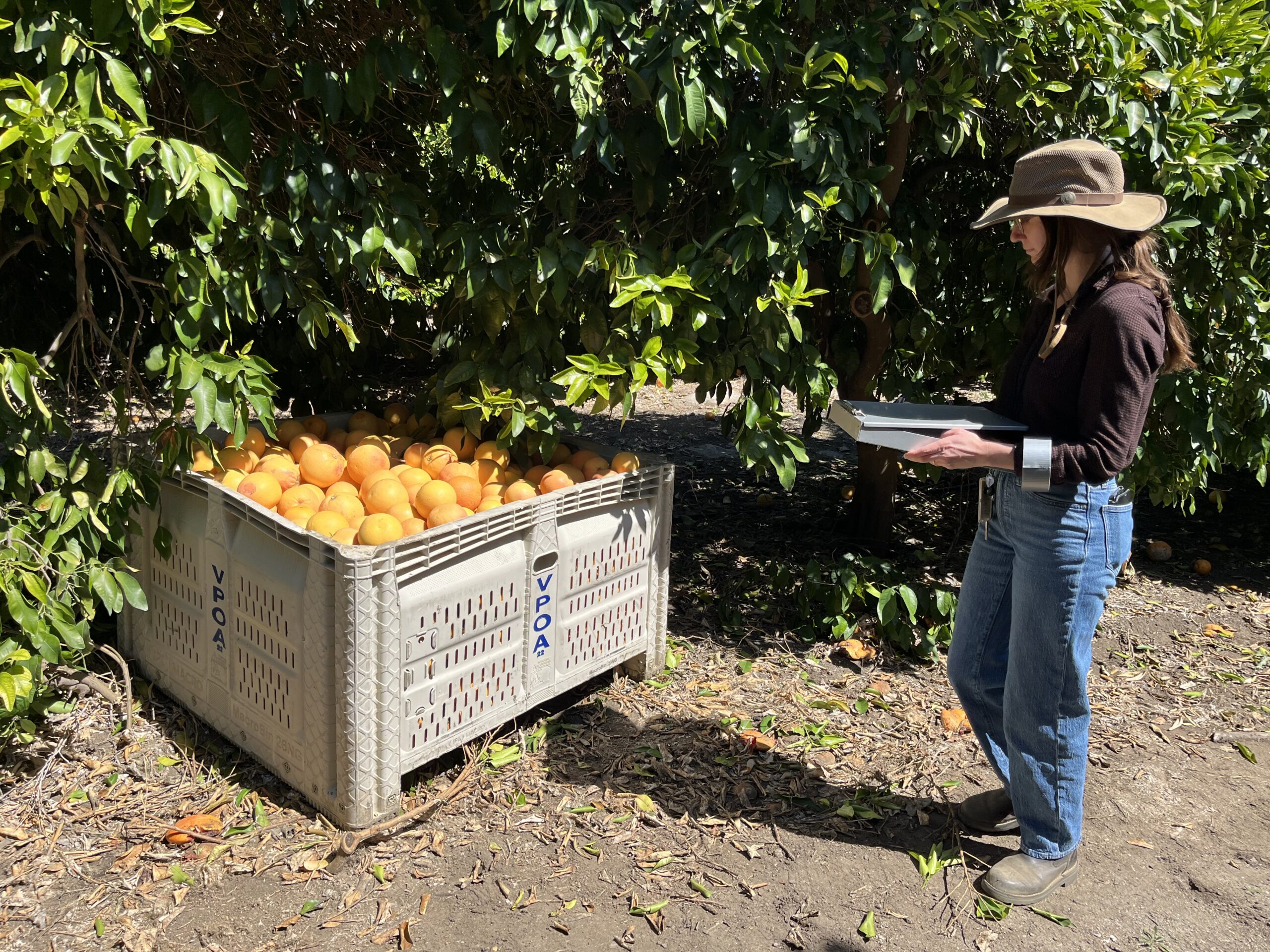
- Performed 306 grower inspections
- Performed 260 transporter inspections
- Performed 86 packinghouse inspections
- Performed 77 fruit seller inspections
- Issued 38 compliance agreements to ensure safe movement of citrus fruit and inhibit the spread of the ACP and the deadly citrus disease, HLB
- Of the 729 shipments inspected by the program, 99% were compliant with quarantine requirements
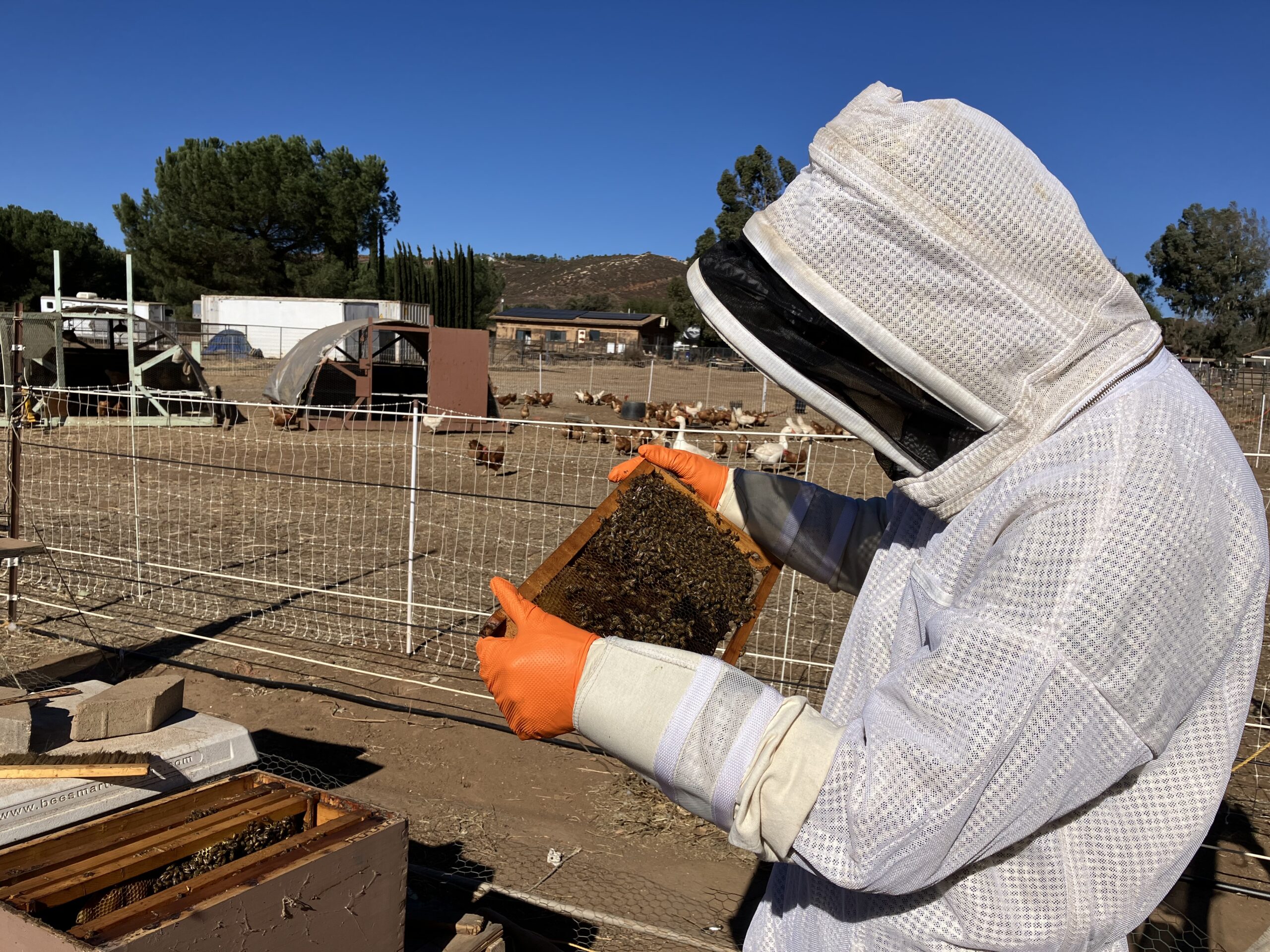
The Apiary Program educates beekeepers on County and State apiary regulations including the requirement that beekeepers register their hive locations with the County Agricultural Commissioner. This program conducts regulatory inspections of apiaries located in unincorporated areas of the county to ensure regulatory compliance, support public health and safety, and protect pollinators. Registration promotes regulatory contacts with beekeepers for the exchange of important information on pesticide applications, quarantines, and best management practices.
- Registered 332 beekeepers, totaling 22,753 managed honeybee colonies in 814 apiary locations
The Pesticide Regulation Program (PRP) protects human health and the environment by regulating pesticide use and fostering reduced-risk pest management through evaluations of Restricted Material Permits, outreach, inspections, complaint and illness investigations, and enforcement. PRP protects the health and safety of employees and the community while supporting a sustainable environment by identifying and reducing risk associated with the handling and storage of pesticides. The California Department of Pesticide Regulation (CDPR) evaluates PRP annually and has provided an “Effective” performance rating since 2016. A n “Effective” rating is the highest rating possible, indicating the program has met all CDPR’s performance standards.
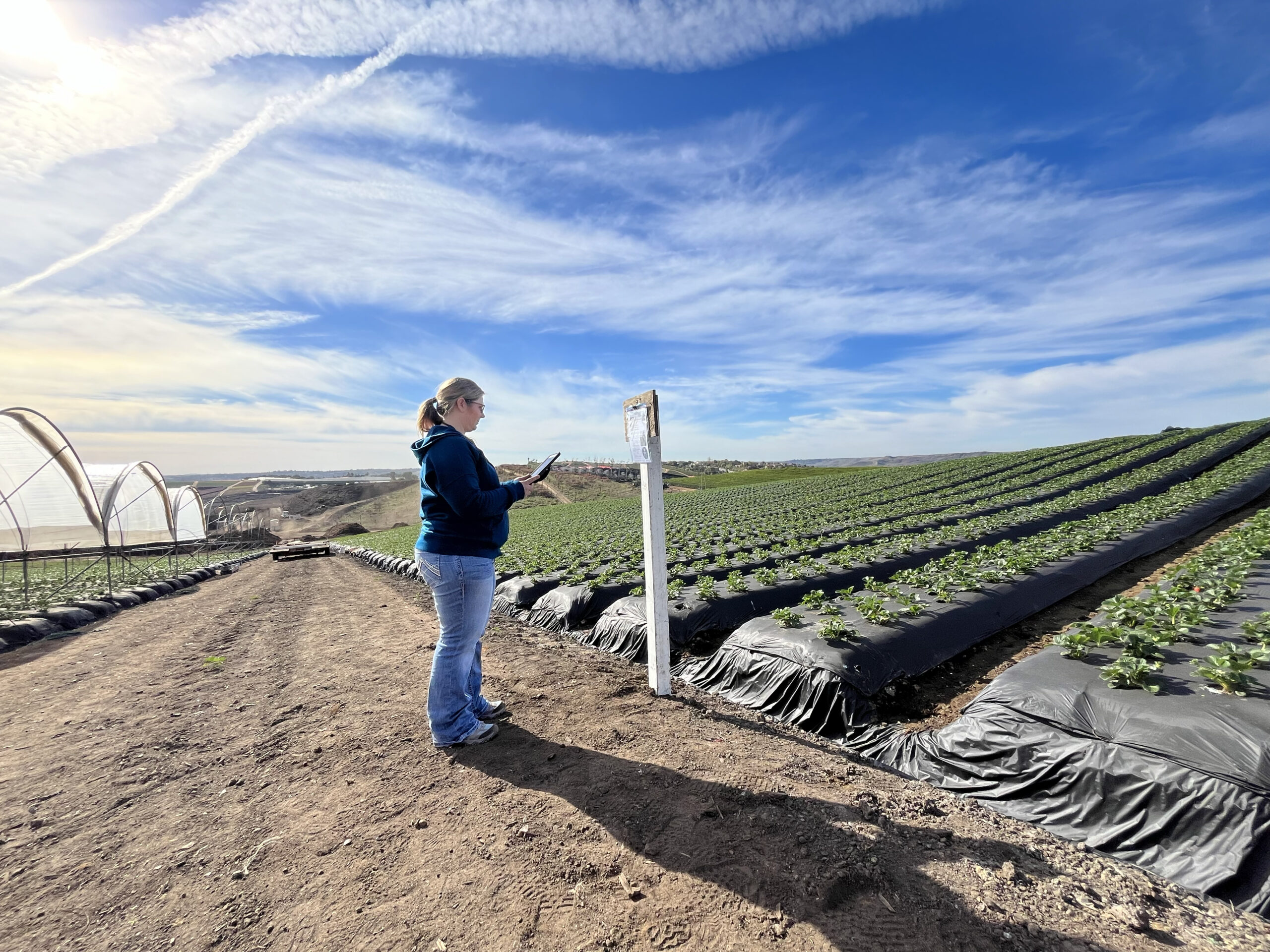
- Conducted 1,719 Pesticide Regulation inspections with an approximate 94% compliance rate
- Conducted 76 Hazardous Materials Inventory inspections
- Completed 73 pesticide or antimicrobial illness investigations
- Investigated 63 pesticide use and storage complaints
- Issued 142 Restricted Materials Permits. Of the 142 Restricted Material Permits, 36 were issued to production agricultural operations, and 106 were issued to non-production agriculture settings (parks, golf courses, cemeteries) and non-agriculture settings (residential, industrial, and institutional)
- Conducted 23 outreach events reaching over 1,025 industry members and residents
- Participated in 7 industry associations meetings
- Issued 14 Cease and Desist Orders
- Took 112 enforcement actions and 337 compliance actions
- Collected 6,094 pounds of pesticides at an unwanted pesticide disposal event
- Collected 556 pounds of empty pesticide containers to recycle at three pesticide container recycling events
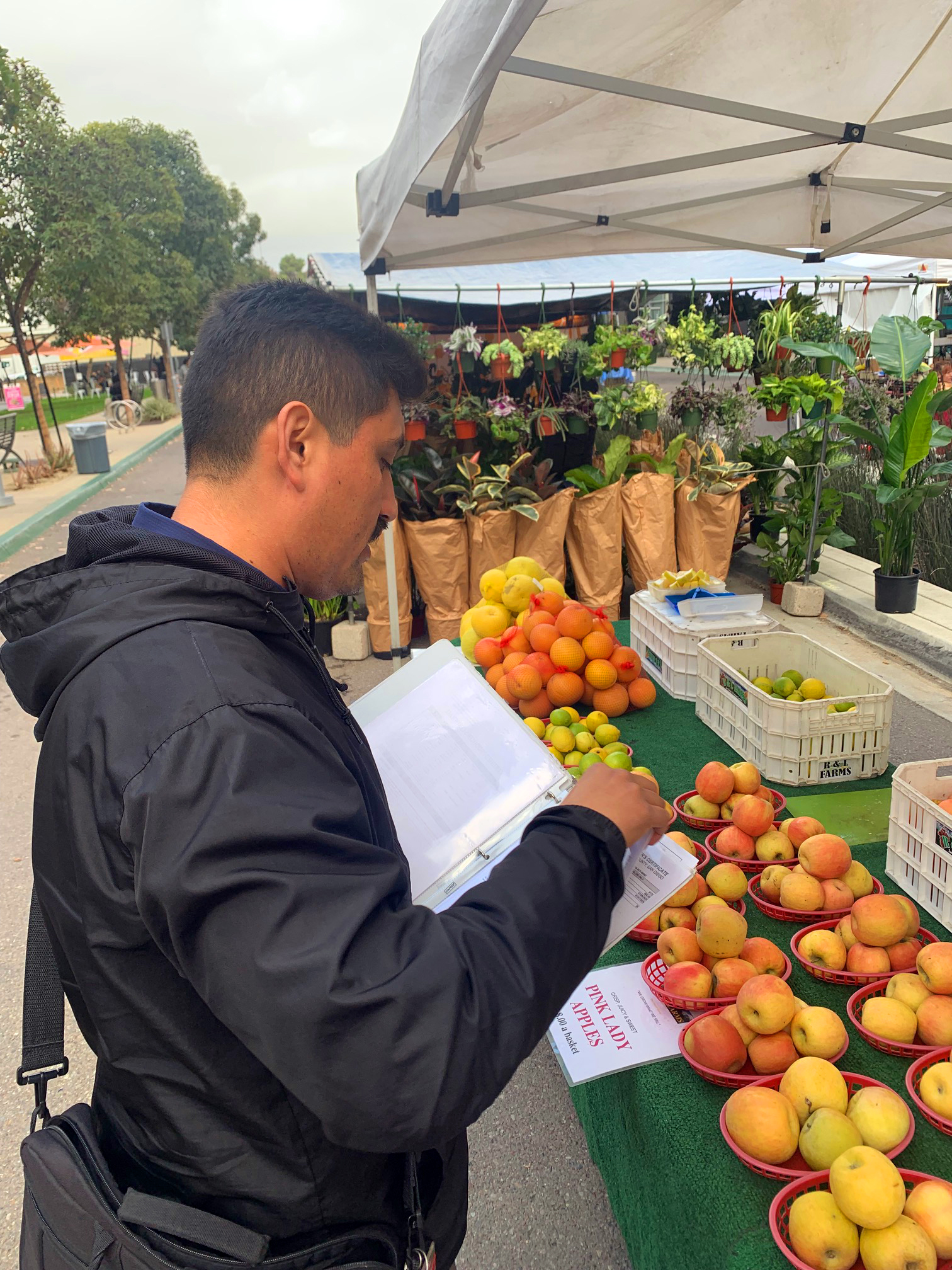
The Agricultural Standards Division (AGS) provides regulatory services that support access to heathy produce, increased agricultural trade, integrity in the marketplace, sustainable agricultural practices, and public safety. Activities include inspecting Certified Farmers Markets (CFM), Certified Producers (CP), organic growers/retailers/handlers, industrial hemp cultivators, and produce at wholesale and packing house locations. Additionally, AGS verifies commercial agricultural or livestock operations for inclusion in the County Ag Pass Program.
- Issued certificates to 38 CFMs and conducted 52 inspections at these markets with a compliance rate of 69%
- Issued 259 certificates to CPs and conducted 735 inspections of CPs at CFMs with a compliance rate of 96%
- Conducted 163 Fruit and Vegetable Standardization inspections with a compliance rate of 94%
- Completed 204 Organic Agriculture Program inspections among 420 active organic growers with a compliance rate of 97%
- Issued registrations to 13 growers who harvested 1.6 acres of industrial hemp, and 10 routine cultivation activities were conducted on hemp registrants with a compliance rate of 72%
The Agricultural Water Quality Program performs inspections at commercial agricultural operations to support regional water quality by ensuring compliance with the San Diego Regional Water Quality Control Board stormwater permit requirements. Outreach, inspections, and investigations focus on preventing potential pollutants such as fertilizers, pesticides, sediment, and organic waste generated by commercial agriculture activities from entering the stormwater system, impairing water quality, and harming aquatic life.
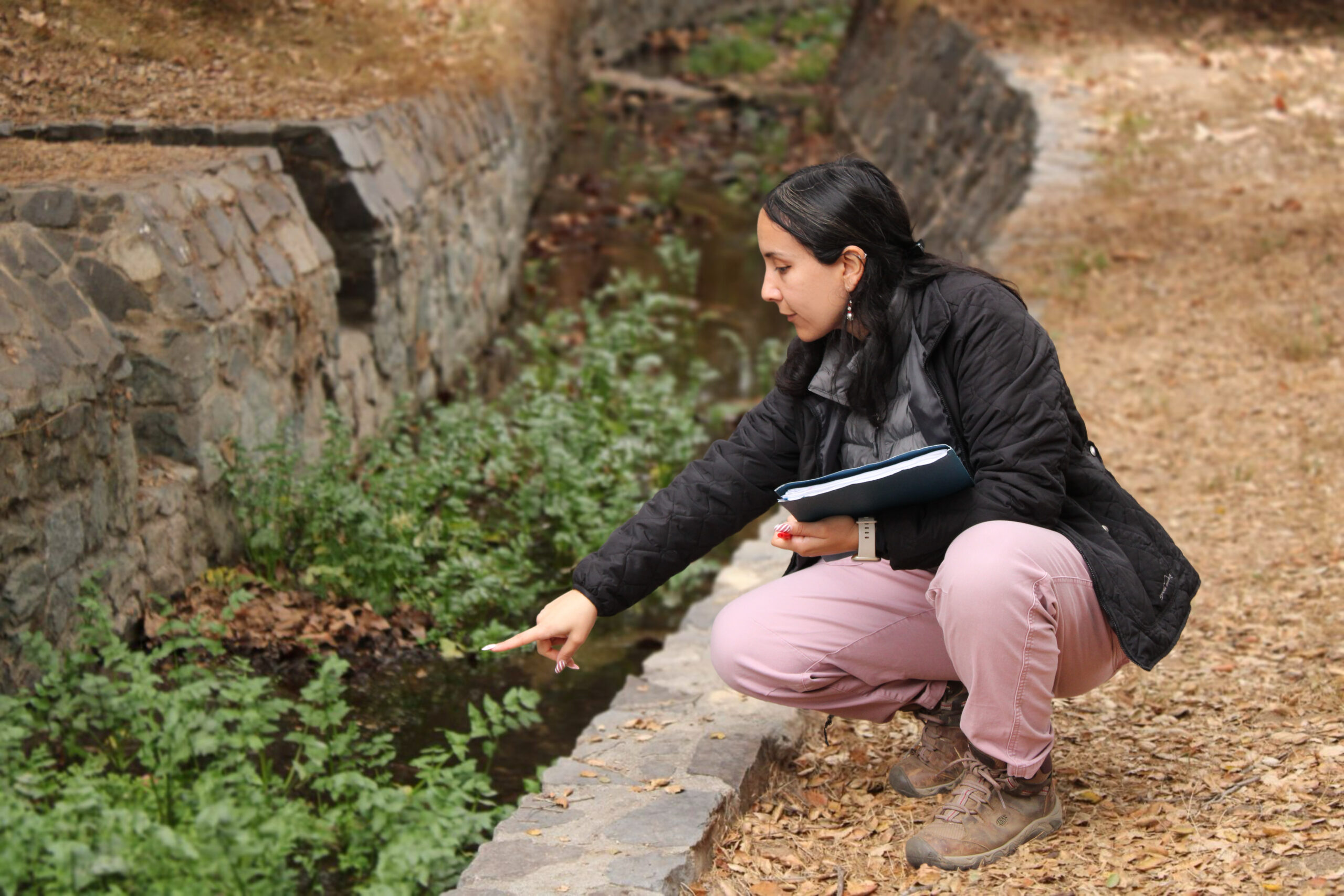
- Completed 641 inspections
- Investigated 12 complaints
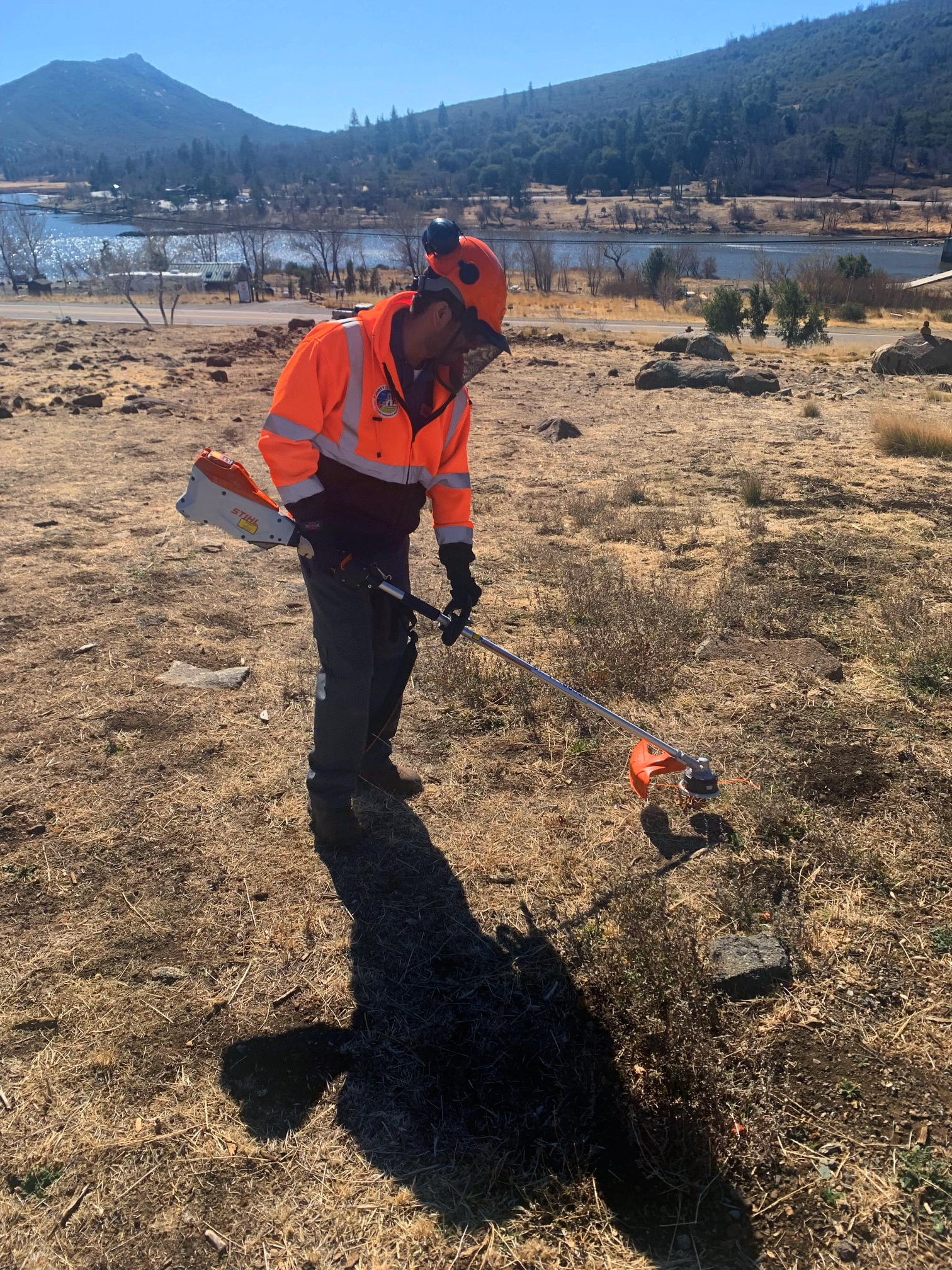
The Integrated Pest Control Program supports human health and safety, and environmental sustainability by implementing the Board of Supervisors’ F-45 Policy, “Pesticide Use Reduction,” which mandates the use of an Integrated Pest Management (IPM) strategy. IPM is an effective and environmentally sound approach to pest prevention and management that incorporates current scientific information and control methods. It aims to prevent, manage, and eradicate unwanted pests while mitigating potential hazards to people, property, and the environment. IPCs’ weed control enhances road visibility and clearance, reduces fire danger along roadways and intersections, and improves drainage to prevent flooding. The program’s structural pest control work safeguards County staff and customers by mitigating public nuisances and human disease, discomfort, or injury by reducing pest populations known to be vectors of transmittable diseases.
- Treated with herbicides or manually removed 1,192 acres of weeds
- Treated 203 County facilities for structural pests
The Weights and Measures Division ensures consumers get what they pay for and supports fair competition in the marketplace to promote economic equity and sustainability. The division performs inspections to verify accuracy of product weight, measure, and price. These inspections include testing of commercial weighing and measuring devices, labeling and advertising requirements for petroleum products, price verification (price scanners), quantity control for packages, and weighmaster compliance.
- Inspected 66,218 commercial weighing and measuring devices with a 77% compliance rate
- Investigated 345 consumer complaints regarding commercial meters and scales, petroleum, package/labeling, and price overcharges
- Inspected 1,637 retail locations for price accuracy with 24,469 items scanned with an 81% compliance rate
The Civil Actions Program supports due process through administrative civil penalty actions, or fine actions, to gain regulatory compliance.
AWM conducted inspections to verify compliance with State laws and regulations and County ordinances. During some inspections, non-compliances were found that resulted in the issuance of 576 fines. AWM held four requested administrative hearings (one in Weights and Measures and three in Pesticide Regulation) in which the hearing officer upheld the fines. Of the civil penalty actions:
- 460 were issued by Weights and Measures (354 price verification, 94 device, 12 quantity control)
- 112 were issued by Pesticide Regulation (38 structural, 74 agricultural)
- 4 were issued by Agricultural Standards (4 direct marketing)
| Program | Services | How to Reach Staff |
|---|---|---|
| AWM | All services | 858-694-2739 www.sdcawm.org sdcawm@sdcounty.ca.gov |
| Agricultural Standards | Certified Farmers Markets and Certified Producer certificates; organic handler/producer/retail; fruit and vegetable standardization; industrial hemp cultivation; agricultural stormwater; Ag/livestock Pass | 858-614-7786 FAX: 858-467-9273 |
| Citrus Quarantine | Enforcement of Asian citrus psyllid and Huanglongbing (citrus greening) quarantine requirements | 858-614-7770 FAX: 858-467-9697 |
| Civil Actions Program | Administrative civil penalty actions, or fine actions | 858-614-7730 |
| Detector Dog Teams | Parcel inspections at terminal sorting facilities and the USPS distribution center | 858-614-7770 FAX: 858-467-9697 |
| Hazardous Materials Inventory | Inspections and registrations of agricultural hazardous materials; and California Environmental Reporting System assistance | 858-694-8980 FAX: 858-467-9277 |
| Apiary Program | Apiary registration, inspections, complaint investigations, education, and outreach | 858-614-7738 FAX: 858-467-9697 |
| Integrated Pest Control | General and invasive weed control, and structural pest control at County facilities | 858-614-7750 FAX: 858-467-9279 |
| Pest Detection | Invasive insect trapping for invasive fruit flies, spongy moth, Japanese beetle and more | 858-614-7770 800-300-TRAP(8727) FAX: 858-467-9697 |
| Pest Exclusion (Import, Export, Nursery; Pierce's Disease; Sudden Oak Death) | Inspections of incoming and outgoing plant commodity shipments; phytosanitary and quarantine compliance certificates; nursery inspections; Spongy moth and Spotted Lanternfly inspections | 760-752-4700 Inspection Request Line: 760-752-4713 FAX: 760-724-4098 |
| Pesticide Regulation | Pest Control Business Registration, Restricted Materials Permits, Operator Identification Numbers, pesticide use reporting, employee pesticide training, and pesticide complaints | 858-694-8980 FAX: 858-467-9277 prp.awm@sdcounty.ca.gov |
| Plant Pest Diagnostics Lab | Insect identification for regulatory purposes and pest surveys | 858-614-7738 FAX: 858-467-9697 |
| Weights and Measures | Price verification (price scanners) and commercial weighing and measuring device registration and inspections, weighmaster, petroleum quality/labeling, package, and labeling inspections | 858-694-2778 FAX: 858-467-9278 wm.awm@sdcounty.ca.gov Meter Testing Lab Hours: 8:00am-5:00pm M-F |
The 2024 Crop Statistics and Annual Report was produced by Program Coordinator Porfirio Mancillas, Operations Research Analyst Bosko Celic, and Information Technology Principal Vince Acosta. Photos were mostly taken by AWM employees with farmers’ consent.
All reported figures represent Freight on Board (F.O.B.) values for products. These are not net values and do not reflect cost of production. Total values may not add precisely due to rounding. Gross value of farm products does not reflect the total value to the economy. Values are aggregated to maintain farmers’ confidentiality.